


You walk into your home and are greeted by a jumble of boots, coats, and bags. The floor is wet from melting snow, and there’s nowhere to sit while you wrestle off winter gear or set down your briefcase. It feels like chaos has invaded a space meant to welcome you and your guests. This sense of disorder escalates when you picture friends stepping over piles of shoes or when your children can’t find their gloves on a school morning. Clutter becomes a daily stressor that undermines the comfort and luxury of your home.
The good news is that this isn’t inevitable. Thoughtful entryway closet ideas transform a messy entrance into a calm and organized space. By addressing storage challenges head‑on, you’ll protect your floors, cut down on stress, preserve your home’s appeal, and set a polished tone for everything beyond the front door.
Why Is Canadian Entryway Storage Important?
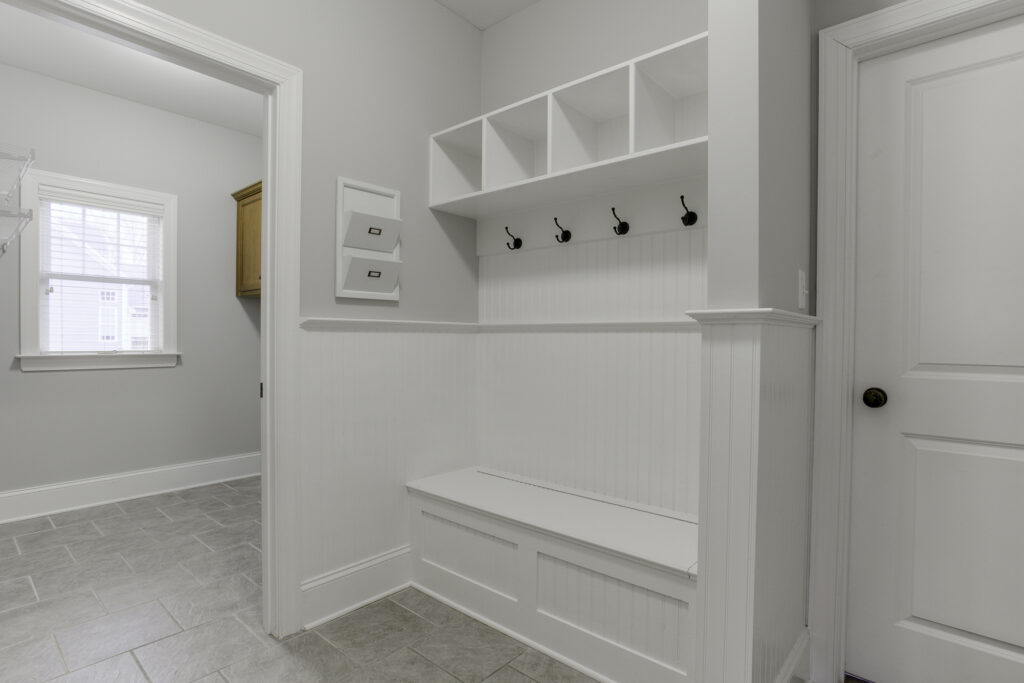
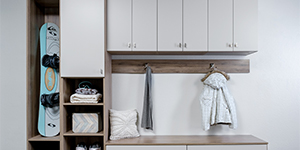
Spacious mudroom featuring a bench with hooks and storage compartments, with an adjacent laundry space. This design emphasizes organization and convenience, creating a welcoming and practical entrance while offering ample storage solutions for a busy household.
Canadian winters bring snow, slush, and salt. Without proper storage, these elements can damage flooring and create hazards. Spring brings rain and mud, while summer can track in dust and beach sand, and autumn leaves cling to shoes. Each season challenges your entrance in different ways. A well‑designed entryway closet keeps moisture and dirt contained and extends the life of your flooring. It also simplifies daily routines by making it easy to grab what you need and go, whether you’re heading to work, dropping the kids off at practice, or taking the dog out.
Winter gear isn’t the only consideration. Busy households juggle work bags, sports equipment, and pet accessories. High‑income families may need space for golf clubs, skis, and extra coats for guests. Designated storage zones reduce morning chaos and help everyone stay organized. An efficient entryway is especially valuable in homes where attention to detail and comfort are priorities because it preserves the beauty of your finishes and keeps the foyer welcoming.
Key reasons to prioritize Canadian entryway storage include:
- Protect your investment with proper mats, boot trays, and closed storage to prevent water damage and scratches on hardwood or tile.
- Simplify routines by giving everyone a place to stash gloves, keys, and umbrellas so mornings run smoothly.
- Maintain cleanliness by using hooks, benches, and bins to keep mud and sand from spreading through the house.
- Enhance aesthetics because an orderly entry signals hospitality and sets the tone for the rest of your home.
- Accommodate seasonal gear with designated spots for skates, skis, or beach bags so they don’t clutter your main closet.
How Do You Design A Functional Front Hall Closet?
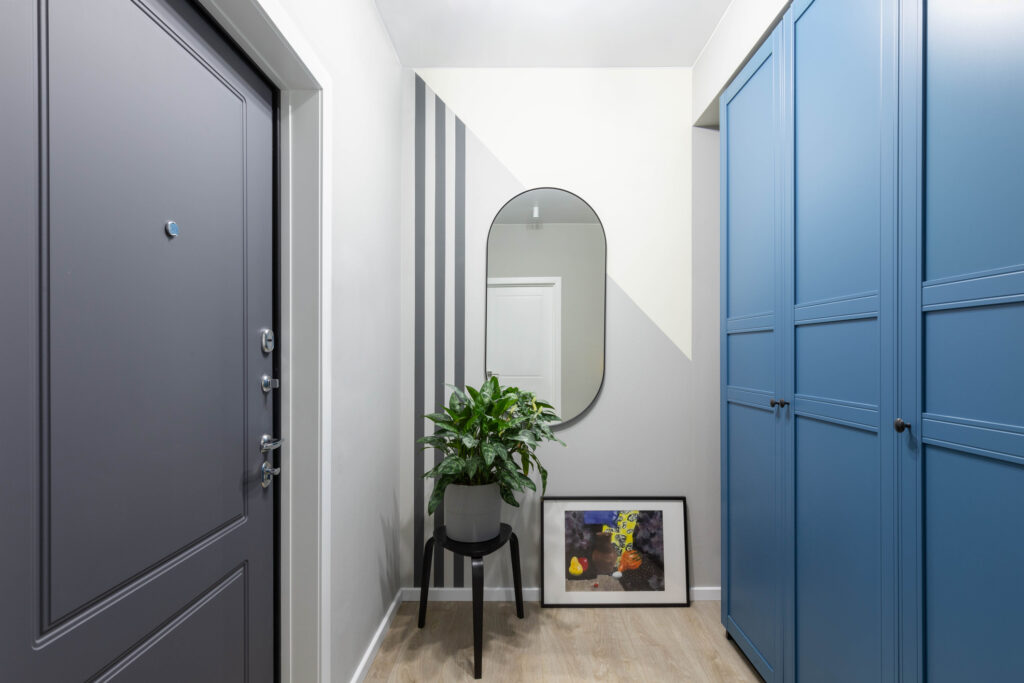
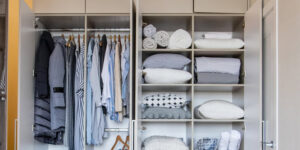
A functional front hall closet starts with assessing your space. Measure the area and note obstructions such as doors or baseboard heaters. Next, think about what you need to store. Coats, shoes, backpacks, mail, and pet leashes all compete for space near the door. A clear list helps you allocate storage zones effectively.
A good design uses vertical space. Wall‑mounted units with hooks and shelves keep items off the floor and make it easy to clean. Consider materials that withstand moisture, like painted wood, laminate, or metal hardware. Mixing open and closed storage hides clutter while keeping daily essentials within reach.
Assessing Your Needs & Space
Begin by listing what each household member brings through the door. Do you need space for strollers, hockey equipment or musical instruments? Are children able to reach hooks? Use this information to decide on the number of shelves, cubbies, and hanging rods. For narrow halls, a slim cabinet with sliding doors saves space and keeps items out of sight.
Selecting Materials & Fixtures
Materials should be durable and low‑maintenance. Moisture‑resistant finishes prevent warping, and sturdy hooks can support heavy winter coats. Include a bench that doubles as storage; even a shallow seat provides comfort while tying shoes. Install lighting inside the closet so that you can easily see what’s stored.
Soft‑close hinges and high‑quality hardware add a sense of luxury and prevent wear. Don’t forget to consider ventilation if your closet has doors: louvers or mesh panels allow airflow to prevent musty odours.
Incorporating Personal Touches
Add a mirror for a final outfit check and artwork to introduce personality. Use baskets or boxes in colours that complement your décor. Label drawers or cubbies so everyone knows where their items belong. These small touches make the space inviting and reflect the care you’ve taken in designing it.
Personal touches can also include a small charging station for phones and a drawer for sorting mail. A well‑planned closet not only organizes your belongings but also elevates your entryway into a welcoming focal point. Remember to leave room for future needs so that your design can evolve with your lifestyle.
What Are Effective Mudroom Layouts For Gear Storage?
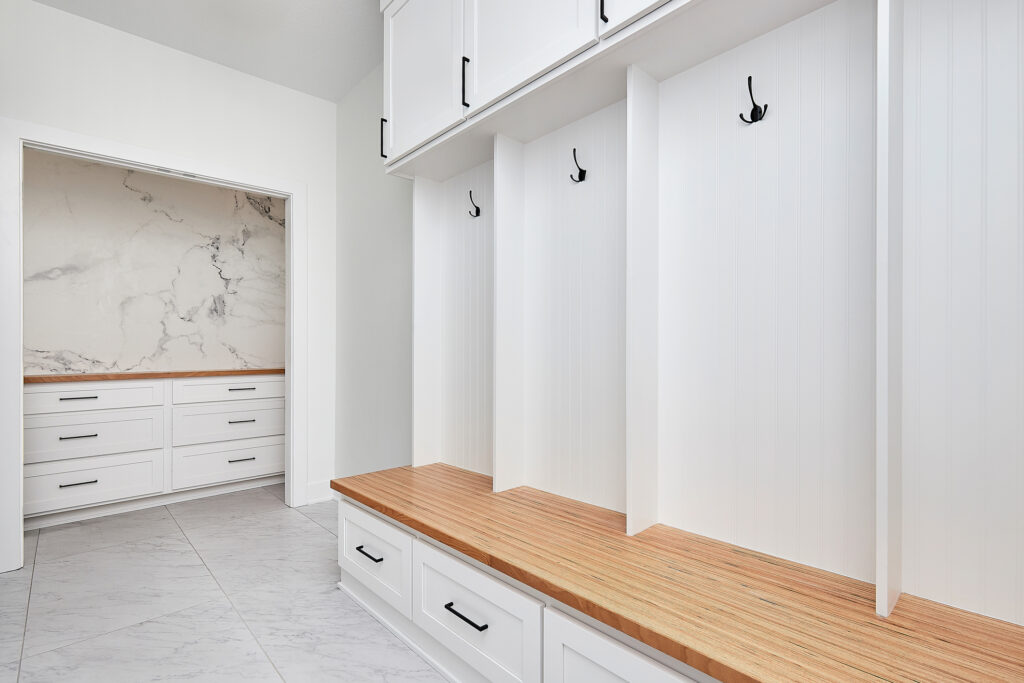
A mudroom acts as a buffer between the outdoors and your living space. It should be designed to handle wet gear and heavy traffic. Start with durable flooring such as tile, slate, or vinyl that can withstand water and dirt. Position a sturdy bench near the door so you can sit and remove boots. Drawers or baskets underneath offer storage for shoes.
High cabinets provide a place for off‑season items like summer sandals or holiday decorations. Wall‑mounted hooks at varying heights let adults and children hang jackets and bags. Personalized cubbies ensure each family member has a dedicated spot. Chalkboards or corkboards above the cubbies can display reminders and schedules.
Effective mudroom features include:
- Defined wet and dry zones: place boot trays or rubber mats near the entrance to catch drips. Keep clean shoes and bags farther inside.
- Flexible storage: adjustable shelves and movable baskets accommodate changing needs as children grow or hobbies shift.
- Personalized compartments: labelled cubbies encourage children to put away their things and help prevent mix‑ups.
- Additional amenities: a small sink or tap makes rinsing muddy boots easy. Radiant floor heating or an overhead heater speeds drying in winter.
- Clear sightlines: keep tall cabinets against walls and leave the centre open for easy movement so you don’t trip over bags.
- Seating and storage combos: benches with hinged lids reveal deep bins for sports equipment or dog toys.
- Smart technology: consider heated floors or built‑in boot dryers to manage moisture quickly and keep footwear fresh.
By combining these elements, you create a mudroom layout that keeps gear organized and protects your home from the elements.
Why Are Built‑In Benches & Seating Solutions Worth It?
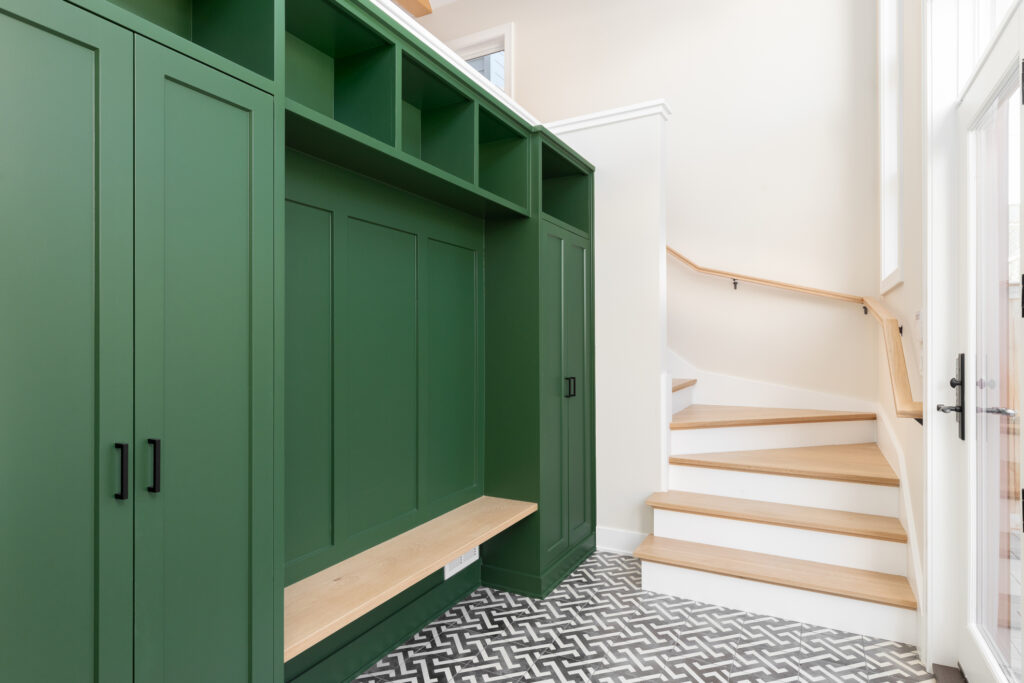
A bench in your entryway provides comfort and convenience. It offers a place to sit while putting on boots and serves as a landing spot for groceries or parcels. Built‑in benches integrate seamlessly with closet systems and maximize storage by incorporating drawers or cubbies beneath the seat.
Choose a bench design that fits your style and space. In larger foyers, a long bench can accommodate multiple people and anchor the room. In small spaces, a corner bench tucks neatly into an unused nook. Upholstered cushions add softness while durable fabric resists wear and tear.
Built‑in benches also contribute to organization. Drawers beneath the seat can store out‑of‑season footwear, reusable bags, or pet supplies. Open cubbies with baskets keep shoes in order and make it easy to designate a spot for each person. When everyone has somewhere to sit and stash their belongings, the entrance stays clear and welcoming.
Another advantage of built‑in seating is customization. You can choose the height, depth, and finish to match your existing cabinetry. Consider adding built‑in lighting under the bench for a soft glow that guides guests at night. Incorporating power outlets or USB ports near seating allows you to charge devices or plug in a boot dryer discreetly. These thoughtful details enhance both function and luxury in your entryway.
Built‑in benches can be designed with lift‑up seats that reveal deep compartments for seasonal items or family games, or with drawers that glide smoothly on soft‑close mechanisms. Extend the bench into a window seat for a cozy reading nook, or create a wrap‑around bench that transforms an unused corner into a conversational spot. Selecting premium upholstery that matches your décor adds a finished look while resisting moisture and wear. You might also integrate a radiator or heating panel beneath the seat to help dry wet footwear and warm the space. These additions create a multifunctional area that invites you to pause, organize, and transition smoothly between the outdoors and your home.
How Can Cubbies & Personalized Compartments Help?
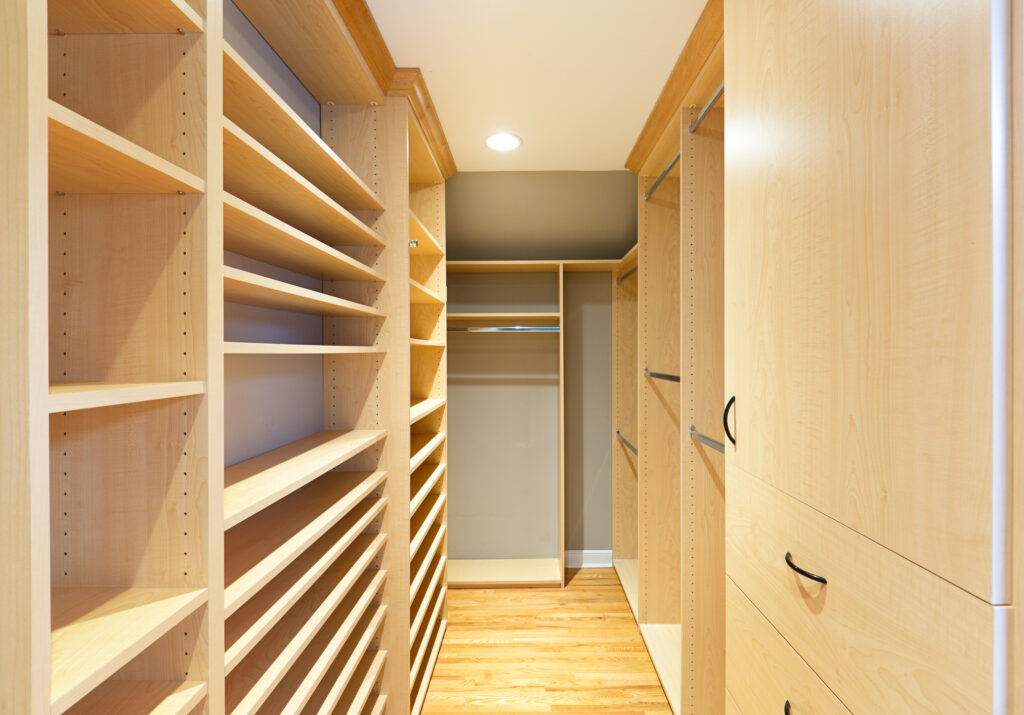
Cubbies bring order to the chaos of everyday items. By giving each family member a designated space for shoes, coats, and accessories, you encourage tidiness and accountability. Cubbies can be open, closed, or a combination of both. Open cubbies make it easy to see what’s inside, while compartments with doors or drawers conceal clutter.
Vary the size of cubbies to suit different needs. Tall sections accommodate long coats or backpacks, while shorter ones fit shoes and smaller bags. Adjustable shelves ensure your storage grows with your family. Label each cubby or assign a colour to help younger children identify their space.
Adding hooks on the sides or inside each cubby increases hanging space for scarves and hats. A shelf above each cubby can hold mail, library books, or outgoing packages. Personalized compartments also integrate well with technology: a small dock for charging phones or tablets keeps gadgets corralled and ready to go. By customizing cubbies, you turn a simple closet into an organizer’s dream and ensure that everyone can access their belongings quickly.
To elevate the look, line the back of each cubby with wallpaper or paint that reflects your home’s palette. Add nameplates or playful labels so that every member of the household knows where their items belong. Include a small chalkboard or whiteboard on the door of each compartment for reminders or messages. Families with pets can dedicate a cubby for leashes, treats, and waste bags. Integrating baskets or woven bins softens the appearance and allows you to swap out seasonal accessories easily. The ability to personalize storage encourages children and adults alike to respect the space and maintain order.
How Do You Integrate Laundry & Multi‑Purpose Zones?
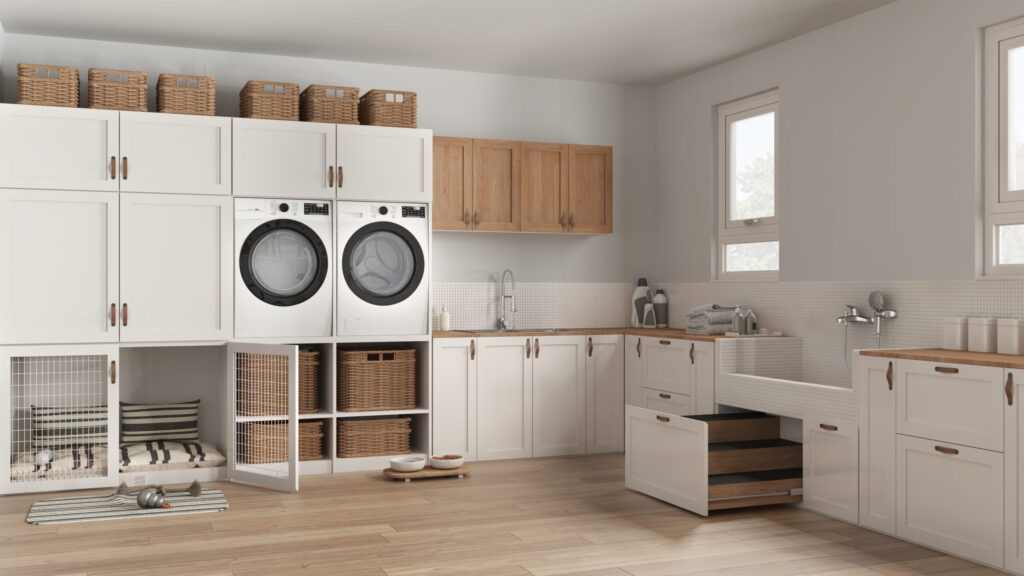
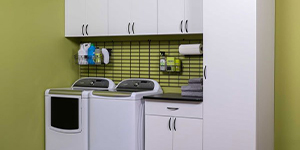
In many homes, space near the entrance must do double duty. Combining your mudroom with a laundry or utility zone can be efficient and stylish. An integrated design saves steps and keeps dirty clothes and wet gear contained in one area.
Start by placing cabinets above washers and dryers to store outerwear, cleaning supplies, and seasonal items. Include a countertop for folding laundry or sorting mail. A deep sink near the door is invaluable for rinsing muddy boots or rinsing out paintbrushes. Add a rod above the sink or machines for hanging wet coats and snow pants. Beneath the counter, a bench with cubbies offers a place to sit while removing shoes and provides storage for detergents or pet leashes.
Key considerations for multi‑purpose zones:
- Use moisture‑resistant finishes throughout to withstand water and detergent spills.
- Install good lighting and ventilation to prevent odours and mold.
- Keep walkways clear by choosing compact appliances and built‑in storage.
- Opt for stackable washer‑dryer units to save floor space without sacrificing capacity.
- Include hampers or pull‑out baskets so that family members can sort dirty clothes as soon as they walk in.
- Incorporate hooks and shelves above machines for frequently used items such as reusable shopping bags or dog leashes.
What Should You Know About Service & Detail: The Closet Envy Experience?

At Closet Envy, we know that an organized entryway does more than store coats; it sets the tone for your day. We are a team of designers and installers who love helping homeowners create spaces they’re proud of. Our Canadian roots mean we understand the demands of our climate and choose materials that withstand snow, salt, and humidity. We source locally whenever possible, so your project supports other Canadian businesses.
What truly sets us apart is how we treat you. From the moment you reach out, we take the time to understand your lifestyle and expectations. We don’t hand you off to a rotating crew; the same designer stays with you from concept to completion, ensuring continuity and accountability. We believe the little details matter, so we think about the height of every hook, the finish of every hinge, and how each drawer feels when you pull it. Those details might seem small, but they add up to an experience that feels personalized and indulgent.
We believe in building relationships as much as closets. When you choose Closet Envy, you get more than a product; you get a partner who wants to help simplify your life. Our service extends beyond installation; we are here for questions, adjustments, and ideas long after your project is complete. If you’re ready to create an entryway that welcomes you home and keeps your life in order, we invite you to take the next step. Let’s work together to design entryway closet ideas tailored to your home, your family, and our Canadian way of life.
Contact us today to see how we can transform your entry and show you what exceptional service feels like.
Summary
Entryway closet ideas tailored for Canadian homes start with understanding why seasonal weather and busy schedules make organized storage essential. This guide describes planning a front hall closet using vertical space, durable materials, and personal touches. You’ll discover how effective mudroom layouts define wet and dry zones, offer flexible storage, and incorporate technology like heated floors. It explores the value of built‑in benches with hidden storage, highlights the benefits of customized cubbies, and details solutions for shoe trays, boot racks, and wet gear management. It shows how to integrate laundry and utility zones seamlessly into a mudroom and suggests ways to maximise small spaces. Finally, it introduces Closet Envy’s personalized approach, emphasising their commitment to quality materials, attentive service, and detail. By applying these ideas, you can create an organized, welcoming entrance that reflects your style, stands up to Canadian climates, and protects your investment for years.